A. GEOGRAPHY (Fixed Territory)
A concise geographic profile of the Hawaiian Archipelago, including location, land area distribution,
topography, and climate characteristics.
View the Hawaiian Archipelago reference page
The Hawaiian Archipelago stretches approximately 1,523 miles (2,451 kilometers) from southeast to
northwest across the Tropic of Cancer, between 154°40′ to 178°25′ W longitude and
18°54′ to 28°15′ N latitude.
Longitude
154°40′ – 178°25′ W
Latitude
18°54′ – 28°15′ N
Maritime Zones: 12-mile Territorial Sea and 200-mile Exclusive Economic Zone (EEZ).
Quick Facts
Territory
132 islands, reefs & shoals
Span
1,523 miles (2,451 km)
Approx. Land Area
6,425 sq mi (16,642 sq km)
1. Location
The Hawaiian Archipelago
comprises 132 islands, reefs, and shoals, stretching approximately 1,523 miles (2,451 kilometers)
from southeast to northwest across the Tropic of Cancer, between 154°40′ to 178°25′ W longitude and
18°54′ to 28°15′ N latitude.
The Archipelago consists of an approximate total land area of 6,425 square miles (16,642 square kilometers),
including numerous small offshore islets and the Northwestern Hawaiian Islands, extending from Kure Atoll
to Nihoa, and also including Palmyra, Midway, and Wake Islands.
The Hawaiian Islands form an archipelago extending over a vast area of the Pacific Ocean, possessing a
12-mile Territorial Sea and a 200-mile Exclusive Economic Zone.
2. Area and Population
Density figures and principal centers of population.
The total land area of the eight (8) inhabited major Islands is 4,112,388 acres, with
nearly two-thirds of that area located on the Island of Hawaiʻi. Land area by island is as follows:
| Island |
Land Area (acres) |
| Hawaiʻi |
2,573,400 |
| Maui |
465,800 |
| Oʻahu |
386,188 |
| Kauaʻi |
353,900 |
| Molokaʻi |
165,800 |
| Lānaʻi |
90,500 |
| Niʻihau |
45,700 |
| Kahoʻolawe |
28,800 |
| Other islands |
2,300 |
3. Topography
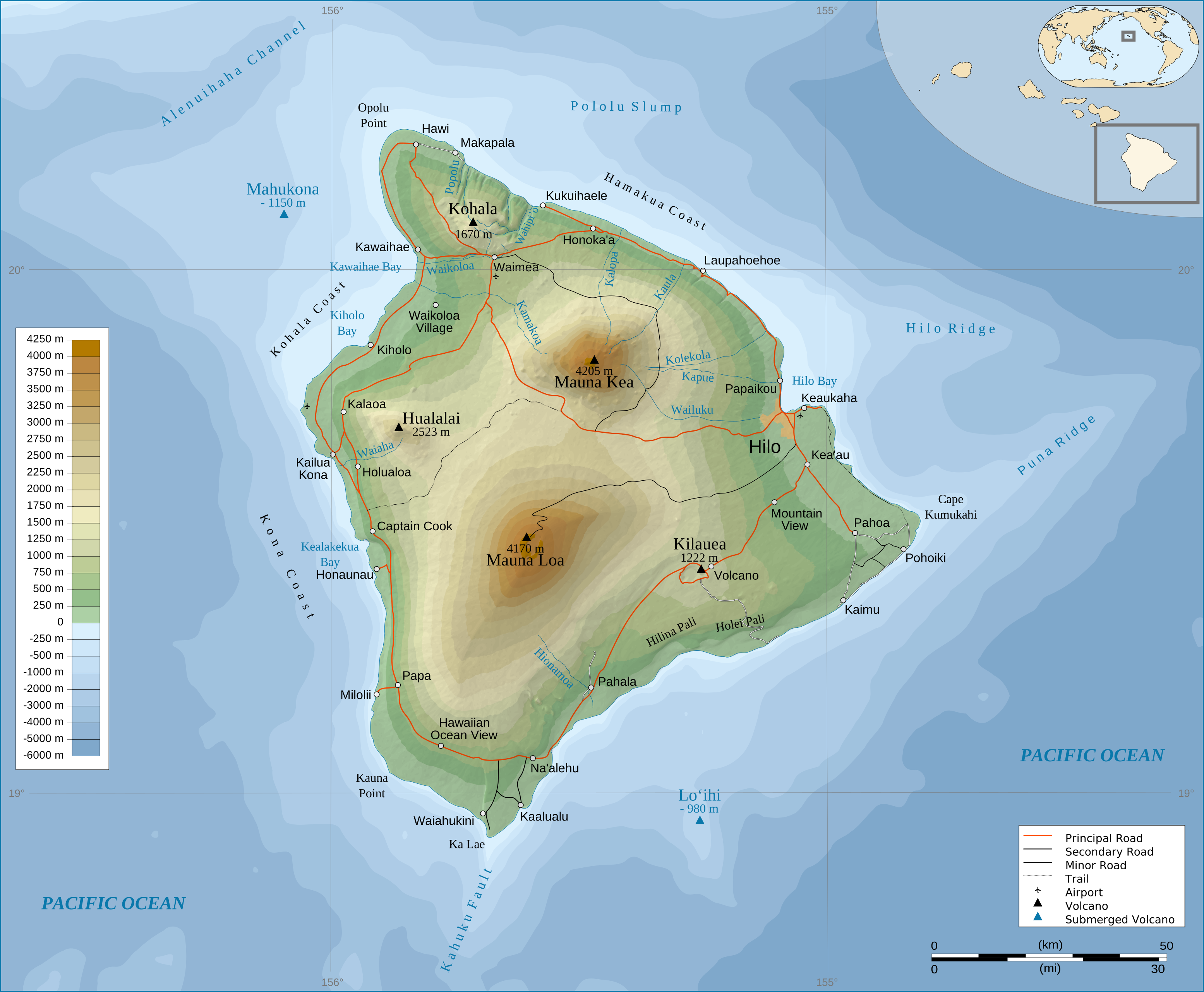
The Hawaiian Archipelago
is of volcanic origin, with the oldest islands extending to the northwest and the youngest island,
Hawaiʻi, remaining volcanically active in the southeast. Kīlauea Volcano is among the most active
volcanoes in the world.
Lōʻihi Seamount, growing off the southeast coast of Hawaiʻi Island, is predicted to emerge as the
archipelago’s newest island more than a millennium in the future. Long-term erosion is progressively
evident with age: Hawaiʻi Island contains expansive lava fields still being pioneered by plant species,
while older Kauaʻi contains deep canyons and strong rivers.
Elevation: Mauna Kea on Hawaiʻi Island reaches 13,796 feet above sea level. When measured
from the ocean floor, this peak is considered among the highest in the world.
4. Climate
The outstanding features of Hawaiʻi’s climate include mild and equable temperatures year-round, moderate
humidity, persistent northeasterly trade winds, remarkable differences in rainfall within short distances,
and an infrequency of severe storms.
In most of Hawaiʻi there are two seasons: “summer,” approximately May through October, when conditions are
warmer and drier and trade winds are most persistent; and “winter,” approximately October through April,
when conditions are cooler and trade winds are more often interrupted by other winds and intervals of
widespread cloud and rain.
With variations in altitude, wind, and moisture, Hawaiʻi contains within its islands a wide range of
climatic zones. Rainfall varies greatly by location, from minimal rainfall in certain leeward areas to
very high rainfall in windward regions, increasing to over 400 inches per year in certain mountain regions
on Kauaʻi and Maui.