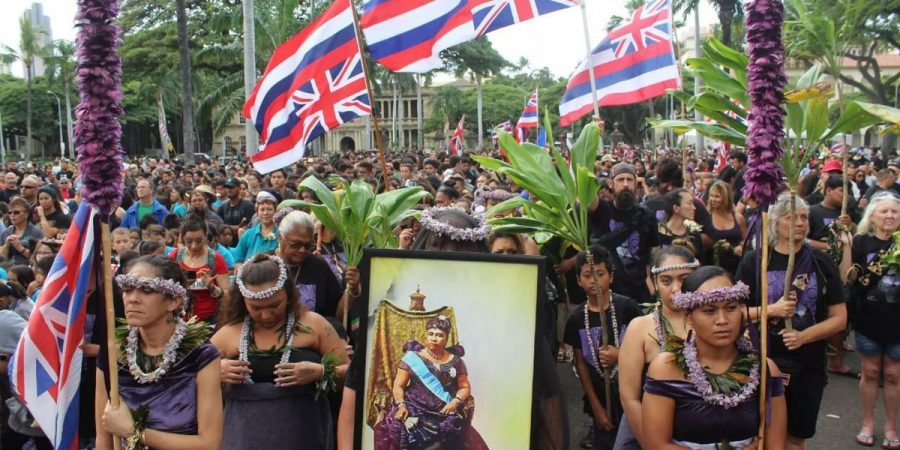
Hawaiian sovereignty refers to the inherent and continuing right of the Hawaiian people to self-governance, political independence, and national identity. It is rooted in the historical existence of the Hawaiian Kingdom as an internationally recognized sovereign nation and in the unresolved legal and political consequences of the 1893 overthrow of that Kingdom.
The question of Hawaiian sovereignty is not merely cultural or symbolic. It concerns international law, treaty history, land title, governance authority, and the right of a people to determine their political future.
This article presents the historical, legal, and contemporary foundations of Hawaiian sovereignty from the perspective of the Nation of Hawaiʻi.
The Hawaiian Kingdom: An Internationally Recognized Sovereign Nation
Before discussing the Hawaiian sovereignty movement, it is essential to understand that the Hawaiian Islands were not an unorganized territory prior to U.S. involvement. The Hawaiian Kingdom was:
- Unified under King Kamehameha I in 1810
- A constitutional monarchy beginning in 1840
- A treaty partner with the United States, Great Britain, France, Japan, and others
- A member of the Universal Postal Union
- Recognized diplomatically by major world powers
By the mid-19th century, the Kingdom of Hawaiʻi functioned as a modern constitutional government with codified laws, land tenure systems, and international diplomatic relations.
The Hawaiian Kingdom was not a colony of the United States.
It was a sovereign state.
The 1893 Overthrow of the Hawaiian Kingdom
On January 17, 1893, Queen Liliʻuokalani was overthrown by a group of American and European businessmen, with the support of U.S. Minister John L. Stevens and U.S. Marines stationed in Honolulu.
The overthrow did not occur through a treaty, vote, or lawful transfer of power. It was an intervention that removed the sitting monarch and installed a provisional government.
Subsequent efforts to annex Hawaiʻi through a treaty failed in the U.S. Senate. No treaty of annexation was ever ratified between the United States and the Hawaiian Kingdom.
Instead, in 1898, Congress passed the Newlands Joint Resolution, a domestic legislative act. Critics argue that a joint resolution cannot legally annex a foreign sovereign nation under international law.
This unresolved legal issue remains central to the modern Hawaiian sovereignty debate.
U.S. Public Law 103-150 (The Apology Resolution)
In 1993, the United States Congress passed Public Law 103-150, commonly known as the Apology Resolution.
The Resolution acknowledged:
- The United States’ role in the overthrow of the Hawaiian Kingdom
- That Native Hawaiians never directly relinquished their claims to their national sovereignty or lands
- The need for reconciliation
While the Apology Resolution did not restore sovereignty, it formally recognized historical wrongdoing and the continuing claims of the Hawaiian people.
This acknowledgment is frequently cited in discussions of Hawaiian sovereignty and legal continuity.
What Is the Hawaiian Sovereignty Movement?
The Hawaiian sovereignty movement includes a wide range of individuals and organizations advocating for:
- Federal recognition
- De-occupation under international law
- Restoration of the Hawaiian Kingdom
- Indigenous self-determination
- Cultural and land-based autonomy
Some groups pursue legal remedies in international forums. Others focus on cultural revitalization and land stewardship. Still others advocate for the complete restoration of an independent Hawaiian nation-state.
The Nation of Hawaiʻi is part of this broader restoration framework.
The Nation of Hawaiʻi: A Restoration-Based Framework
The Nation of Hawaiʻi operates on the premise that the Hawaiian Kingdom’s sovereignty was never lawfully extinguished and that political restoration remains a legitimate and necessary pursuit.
The Nation’s work centers on:
- Legal education and historical documentation
- Cultural preservation and language revitalization
- Land-based community development (such as Puʻuhonua O Waimānalo)
- Economic sovereignty initiatives
- Civic participation and national identity
Rather than framing sovereignty as symbolic, the Nation of Hawaiʻi emphasizes practical nation-building: governance structures, economic development, media institutions, digital infrastructure, and international engagement.
The question is not whether Hawaiʻi had sovereignty.
The question is how restoration may be structured in the 21st century.
Hawaiian Self-Determination Under International Law
The right to self-determination is recognized in international law, including:
- The United Nations Charter
- The International Covenant on Civil and Political Rights
- The UN Declaration on the Rights of Indigenous Peoples
Self-determination includes the right of a people to:
- Determine their political status
- Pursue economic, social, and cultural development
- Maintain institutions of governance
For many advocates, Hawaiian sovereignty is an expression of this principle.
Land, Identity, and Sovereignty
Hawaiian sovereignty is inseparable from land.
The traditional system of communal land tenure, known prior to the Mahele, reflected a relational stewardship model. Land was not merely property; it was genealogical, spiritual, and political.
Loss of national land following the overthrow and territorial period disrupted this system. Restoration efforts often focus on reclaiming land stewardship and strengthening land-based community models.
Sovereignty, in this context, is not only political — it is territorial and cultural.
Common Questions About Hawaiian Sovereignty
Is Hawaiʻi illegally occupied?
This is a debated legal argument within international law circles. Some scholars argue that because no treaty of annexation was ratified, Hawaiʻi’s incorporation into the United States remains legally problematic. Others argue that long-standing governance and recognition of statehood supersede earlier defects.
The issue remains contested.
Is the Hawaiian Kingdom still legally valid?
Some legal scholars argue that the Kingdom’s sovereignty was never formally extinguished under international law. Others disagree. The legal continuity theory remains central to restoration-based movements.
What does the Nation of Hawaiʻi seek?
The Nation seeks peaceful restoration, legal clarity, cultural integrity, and a structured path toward self-governance rooted in history and international norms.
Hawaiian Sovereignty Today
Today, Hawaiian sovereignty is discussed in:
- Academic journals
- International law forums
- Indigenous rights conferences
- Cultural revitalization spaces
- Political advocacy circles
But increasingly, it is also discussed in economic and governance contexts — including digital infrastructure, film, gaming, financial systems, and community-led institutions.
Sovereignty is evolving from protest into platform.
Conclusion: Sovereignty as Restoration
Hawaiian sovereignty is not a relic of the 19th century.
It is an ongoing legal, political, and cultural discussion grounded in documented history and international recognition of the Hawaiian Kingdom as a sovereign nation.
For the Nation of Hawaiʻi, sovereignty means:
- Legal continuity
- Cultural stewardship
- Economic self-determination
- Structured restoration
- Peaceful engagement
The struggle for Hawaiian sovereignty continues — not as an act of defiance, but as an assertion of identity, legality, and future possibility.
0 Comments on "Hawaiian Sovereignty: History, Legal Status, and the Nation of Hawaiʻi Restoration Movement"